DOT Oral Fluid Proficiency Mock Demonstrations
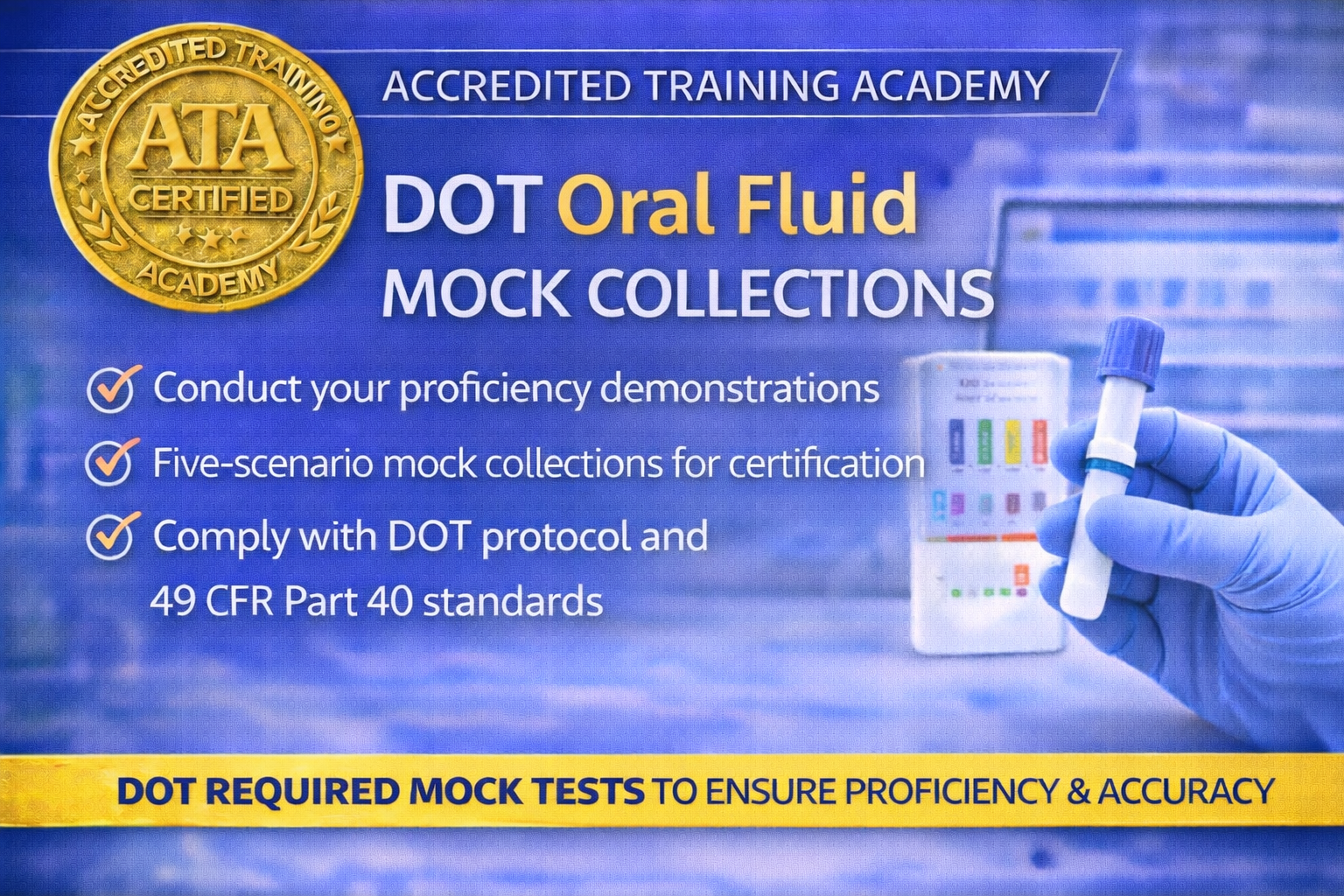
DOT Oral Fluid Collector Mock Collections
Required for DOT Qualification under 49 CFR Part 40
With DOT oral fluid testing officially authorized, collectors must meet strict federal qualification standards before performing oral fluid collections. Completion of training alone is not sufficient.
To become a DOT-qualified Oral Fluid Collector, you are required to successfully complete five consecutive, error-free mock collections for each oral fluid device used, monitored in real time by a qualified trainer.
Our DOT Oral Fluid Mock Collection Program ensures every requirement is met accurately, efficiently, and with proper documentation protecting your credentials and your clients.
Federal Qualification Requirements
To complete oral fluid collector qualification, you must demonstrate:
- Five (5) consecutive, error-free mock collections
- For each oral fluid device type used
- Observed live (in-person or webcam) by a qualified trainer
- Written certification from the trainer verifying error-free performance
All mock collections must be completed in accordance with 49 CFR Part 40.35.
Mandatory DOT Mock Collection Scenarios
Your mock demonstrations must include each of the following federally required scenarios:
- Uneventful Collection
A normal, compliant oral fluid collection - Insufficient Quantity
Donor fails to provide enough saliva for testing - Foreign Substance in Mouth
Donor has gum, food, or other material in the mouth - Tampering Attempt
Donor attempts to interfere with or compromise the specimen - Refusal to Sign
Donor refuses to sign the Custody and Control Form (CCF)
All five must be completed consecutively and without error.
Qualified Monitoring & Documentation
- Mock collections must be observed by a DOT-qualified trainer
- Monitoring may be conducted in person or via live webcam
- The trainer must attest in writing that each mock collection was error-free
- All mock collections must be documented on Federal Custody and Control Forms (CCFs)
Device Handling & Compliance Checks
For every mock collection, collectors must:
- Verify and check the device expiration date
- Show the expiration date to the donor
- Record the expiration date on the CCF
- Apply labels correctly without covering expiration dates
Failure to follow these steps can invalidate qualification.
Important Training & Qualification Notes
- Separate Qualification Required:
DOT urine collector qualification does not qualify you for oral fluid testing. Separate training and mock collections are mandatory. - Multiple Training Formats Available:
Qualification training may be completed via webinar, live instruction, or remote computer-based training. - Effective Date:
DOT oral fluid testing became authorized on December 5, 2024. - Refresher Training:
Required every five (5) years, including repeat mock collections.
Demand Is Growing Are You Qualified?
Employers and TPAs are actively adopting oral fluid testing, and only properly qualified collectors can perform these collections legally.
Our DOT Oral Fluid Mock Collections remove uncertainty, ensure compliance, and get you qualified faster.
Enroll today and secure your place in the next phase of DOT testing.
Related Courses
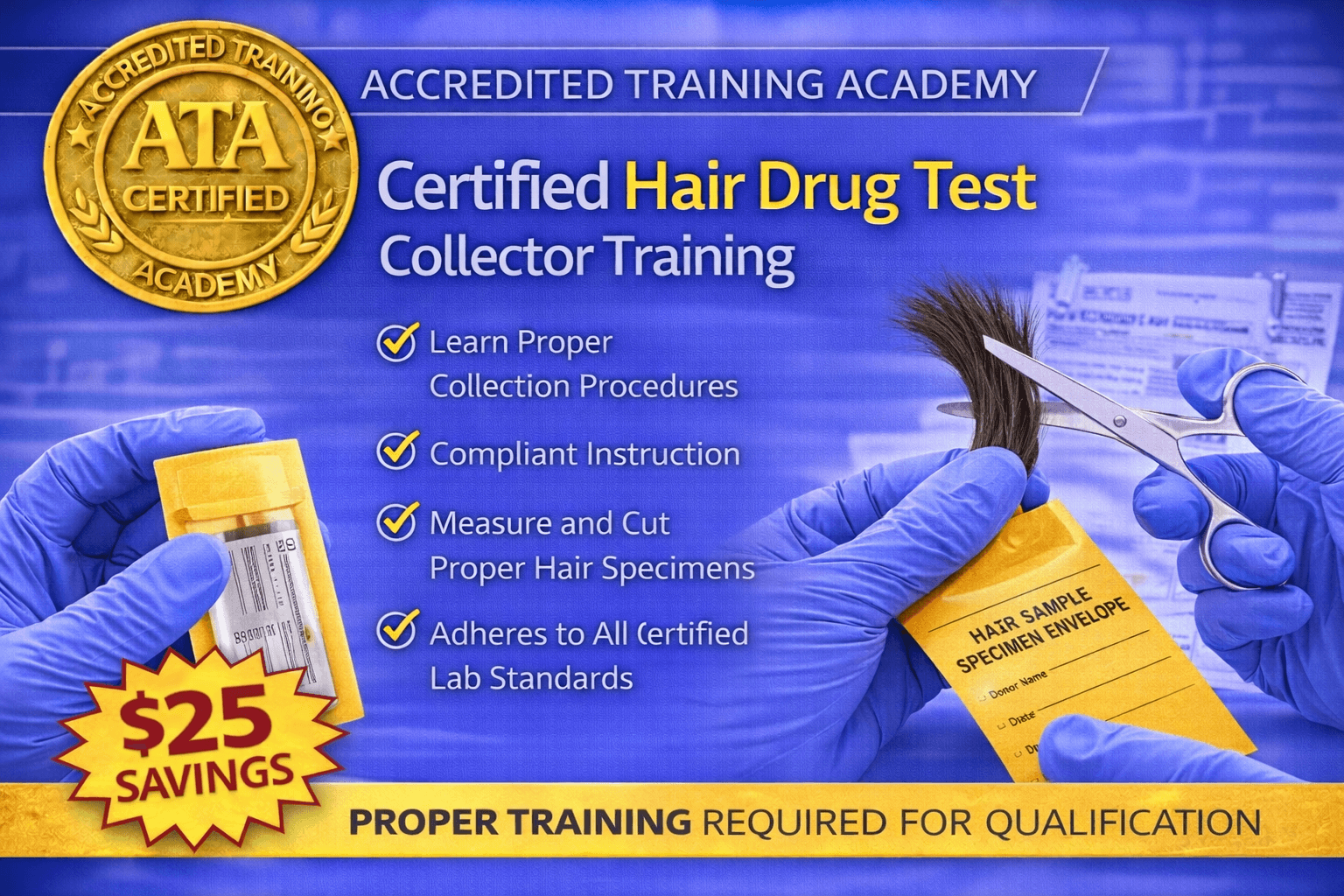
Hair Specimen Collector Training
The Hair Specimen Collector Training Course provides comprehensive instruction and certification for individuals seeking to become qualified hair drug test collectors. This self-paced online training is designed to ensure collectors understand and perform hair specimen collections according to the highest standards of accuracy, professionalism, and legal defensibility. Through expert-led modules, trainees learn the science behind hair testing, proper collection techniques, chain-of-custody procedures, and compliance with laboratory and forensic toxicology standards established by the Society of Hair Testing (SoHT), ILAC-G19, and EWDTS guidelines. Participants will gain hands-on knowledge of: Hair specimen collection and preparation procedures Donor identification and consent protocols Chain-of-custody documentation and shipping requirements Avoiding contamination and maintaining specimen integrity Laboratory analysis overview and cutoff levels Common challenges and best practices in hair testing
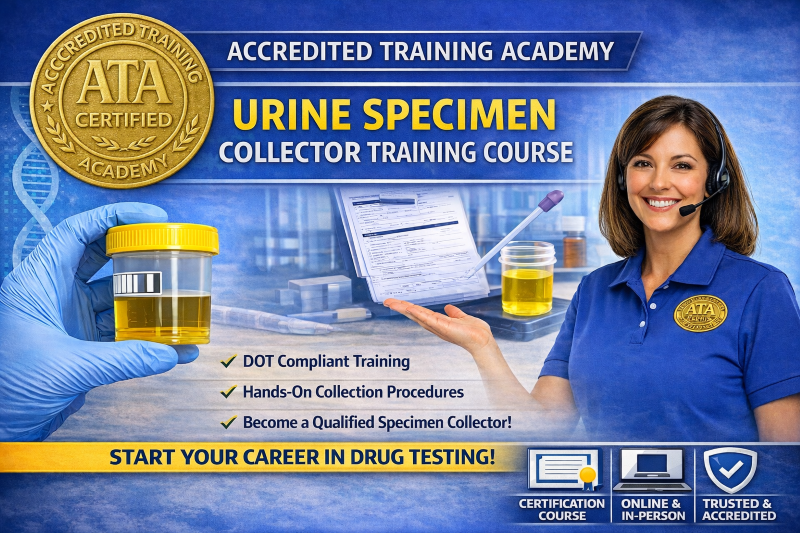
DOT Urine Specimen Collector Training
Collector Training only, does not include required mocks. The drug test collector is the only professional with face to face contact with the donor. Must have DOT Mock collections in order to be DOT Qualified