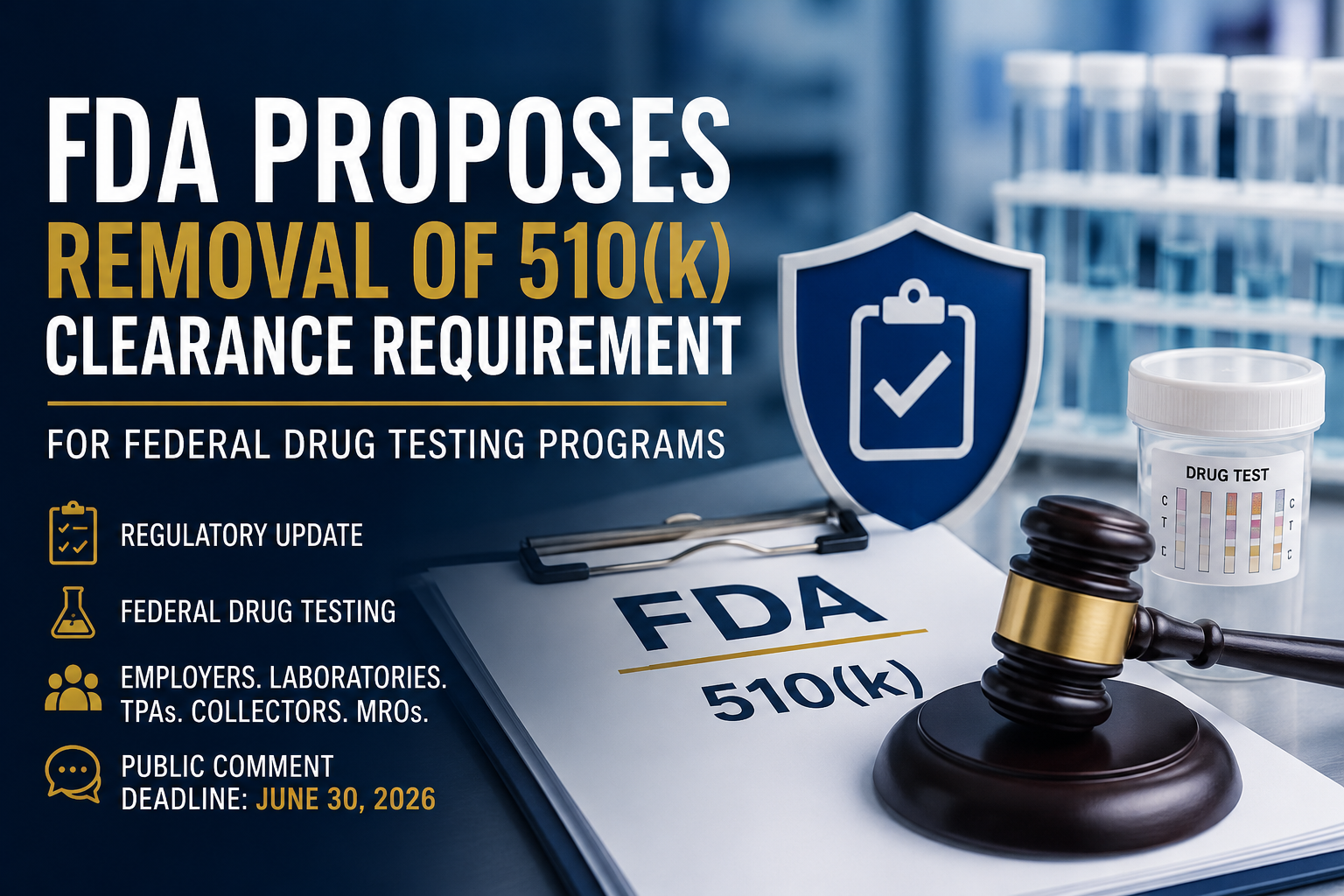
Regulatory Update
FDA Proposes Removal of 510(k) Clearance Requirement for Federal Drug Testing Programs
What DOT employers, DERs, collectors, laboratories, MROs, C/TPAs, and drug testing professionals need to know.
The Food and Drug Administration (FDA) has announced a proposed regulatory change that could impact federally regulated drug testing programs, including U.S. Department of Transportation (DOT) drug testing programs.
At Accredited Training Academy (ATA), we believe students, employers, collectors, Designated Employer Representatives (DERs), Medical Review Officers (MROs), laboratories, and Consortium/Third-Party Administrators (C/TPAs) should be aware of this issue and understand why it matters.
Important Deadline
Public comments are due by June 30, 2026.
Stakeholders may review the FDA notice and submit comments through the federal rulemaking portal.
What Is FDA 510(k) Clearance?
Under current requirements, laboratories conducting federally regulated drug testing programs must use certain screening assays and reagents that have received FDA 510(k) clearance, also known as premarket notification.
A 510(k) clearance generally requires a manufacturer to demonstrate that a device or assay is substantially equivalent to a legally marketed device before it may be used in certain regulated settings.
What Is the FDA Proposing?
On May 1, 2026, the FDA published a notice in the Federal Register announcing its intent to exempt certain Class II clinical toxicology test system devices from premarket notification requirements.
If finalized, this change may remove the current 510(k) clearance requirement for certain devices used in federal drug testing programs, including DOT-regulated testing programs.
Important: The FDA notice states that this proposal is not a final determination. FDA will review public comments before issuing any final decision.
Why This Matters to the Drug Testing Industry
For DOT-Regulated Employers
Employers participating in DOT drug and alcohol testing programs should monitor this issue because changes to laboratory testing requirements may affect future testing processes, laboratory options, and compliance communications.
For DERs and Program Managers
DERs should stay informed so they can properly communicate with laboratories, C/TPAs, MROs, collectors, and internal leadership if regulatory changes are finalized.
For Collection Sites and C/TPAs
Collection sites and C/TPAs should be prepared to answer client questions and monitor whether any future change affects laboratory partnerships, testing panels, workflows, or compliance guidance.
For Laboratories and MROs
Laboratories and MROs may need to evaluate how any final FDA action impacts testing systems, validation practices, reporting, and federally regulated program requirements.
ATA Recommendation
ATA recommends that employers, DERs, C/TPAs, laboratories, MROs, collectors, and other drug testing professionals review the FDA proposal and submit comments if they have concerns, questions, or recommendations.
This is an opportunity for industry stakeholders to participate in the regulatory process before a final determination is made.
How to Review the FDA Notice and Submit Comments
Federal Register Notice:
View the FDA Federal Register Notice
Submit Public Comments:
Submit Comments to FDA Docket FDA-2026-N-4268
Comment Deadline: June 30, 2026
Final Thoughts
Federal drug testing requirements are an important part of workplace safety and transportation compliance. Any proposed change involving federally regulated testing should be carefully reviewed by the professionals and organizations it may affect.
Accredited Training Academy will continue monitoring this issue and will provide updates as additional information becomes available.
Educational Disclaimer: This article is provided for educational and informational purposes only and does not constitute legal advice. Employers and regulated entities should consult applicable federal regulations, agency guidance, legal counsel, and qualified compliance professionals when evaluating regulatory obligations.